Back to Creative Director
Designing Confidence in Moments of Uncertainty
skills
Brand Identity, UX Design
Roles
Director of UX, Brand Strategist
Date
2024


The Business Challenge
Like many large healthcare systems, Novant Health faced increasing pressure to improve patient access while maintaining the high quality of care that had become central to its reputation.
Serving more than seven million patients annually across hospitals, physician practices, and outpatient facilities, the organization operated within a complex environment shaped by workforce shortages, regulatory requirements, and growing patient expectations.
The quality of care wasn't the problem. Access to that care was.
“We know on boarding is a problem, it is for every healthcare network.”
The Customer Reality
Patients rarely begin their healthcare journey knowing exactly what they need. They know how they feel. Finding the right doctor, confirming insurance coverage, determining whether a physician is accepting new patients, and scheduling an appointment often created unnecessary stress before care even began. Many patients simply wanted the reassurance of speaking with a healthcare professional.
Others hoped they could resolve their concerns through trusted self-service resources before scheduling an appointment. The healthcare experience didn't need more choices. It needed greater clarity.
“If their system was easier I could do the scheduling myself – in fact I’d prefer it.”


The Transformation
The redesigned mobile experience focused on the three questions most patients wanted answered immediately:
Speak to a Doctor
Find a Doctor
Help Me Understand What's Wrong
Rather than expecting patients to know which specialist they needed, the experience began with an intuitive symptom-based assessment. Patients described how they felt. The system recommended the most appropriate care path.
Insurance became another opportunity to reduce anxiety. Instead of requiring insurance information before patients could proceed, the experience allowed them to begin the process first, removing an unnecessary barrier at an already stressful moment.
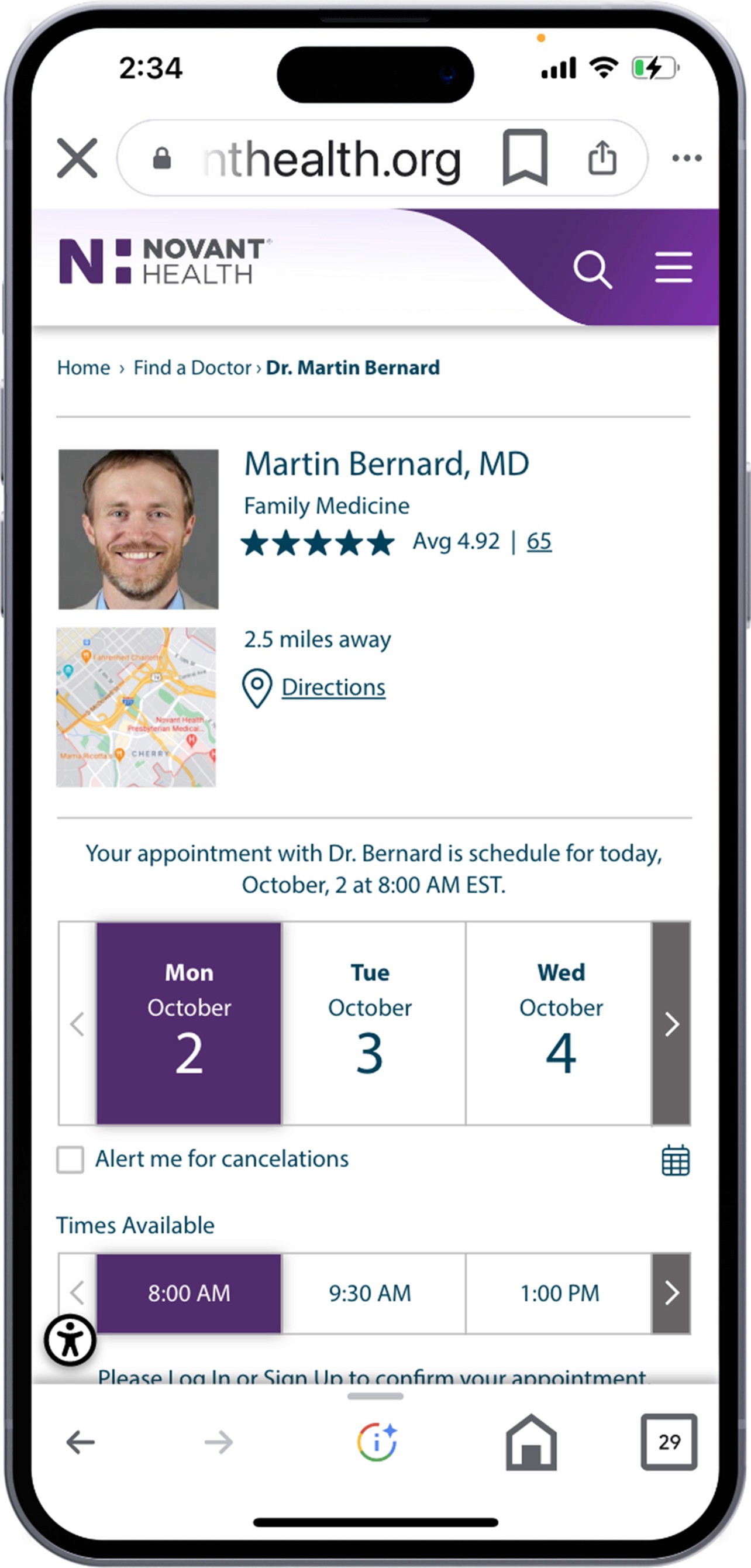
Finally, a universal scheduling experience connected every pathway into a single, seamless system, allowing patients to locate providers, verify availability, and schedule appointments without navigating multiple disconnected workflows. The objective wasn't simply to make scheduling easier. It was to make seeking care feel less overwhelming.
Leadership Insight
One of the greatest opportunities in experience design isn't making interactions faster. It's making them feel less stressed. Healthcare reminded me that every customer arrives carrying a different emotional burden. When someone is worried about their health, every unnecessary decision adds anxiety.
This project reinforced an important principle that continues to guide my work: The best experiences don't simply remove friction. They remove uncertainty.
When technology quietly handles complexity behind the scenes, people gain something far more valuable than convenience. They gain confidence.