Back to Creative Director, Director of UX
Redefining Product Discovery Through Visual Search
skills
Brand Strategy, UX Research, UX Design, Product Design
Roles
Director of UX, Creative Director, Brand Strategist
Date
2024

Looking Ahead
Not every transformation begins with a client. Sometimes it begins with recognizing a shift in customer behavior before the market catches up.
SnapShop explores how AI, computer vision, and personalization could fundamentally change the way people discover products, and how brands create value through discovery rather than search.
The Business Challenge
Traditional search experiences have become increasingly transactional, making it difficult for fashion brands to showcase the depth of their product catalogs or inspire broader customer engagement. Shoppers often know what they want, but not everything they might love. Brands needed a smarter way to connect inspiration, discovery, and commerce while increasing conversion and average order value.
“Using AI in products doesn’t guarantee anything. If using AI makes tasks easier and more fun, then you’re onto something.”
The Customer Reality
Fashion is inherently visual, yet most digital search experiences still depend on keywords. Customers frequently discover products in the real world, on the street, in social media, or through influencers, but finding those products often requires searching across multiple sites and piecing together information themselves.
They wanted a faster, more intuitive way to identify products, discover complementary styles, understand emerging trends, and explore a brand's full assortment, all within a single experience.
“Don’t make me work to learn more about you.”


The Strategic Opportunity
The opportunity wasn't simply to improve search.
It was to transform search from a utility into a source of inspiration.
By combining AI, computer vision, hyper-personalization, and community-driven content, every image could become the beginning of a richer shopping journey rather than the end of a simple product lookup.
The Transformation
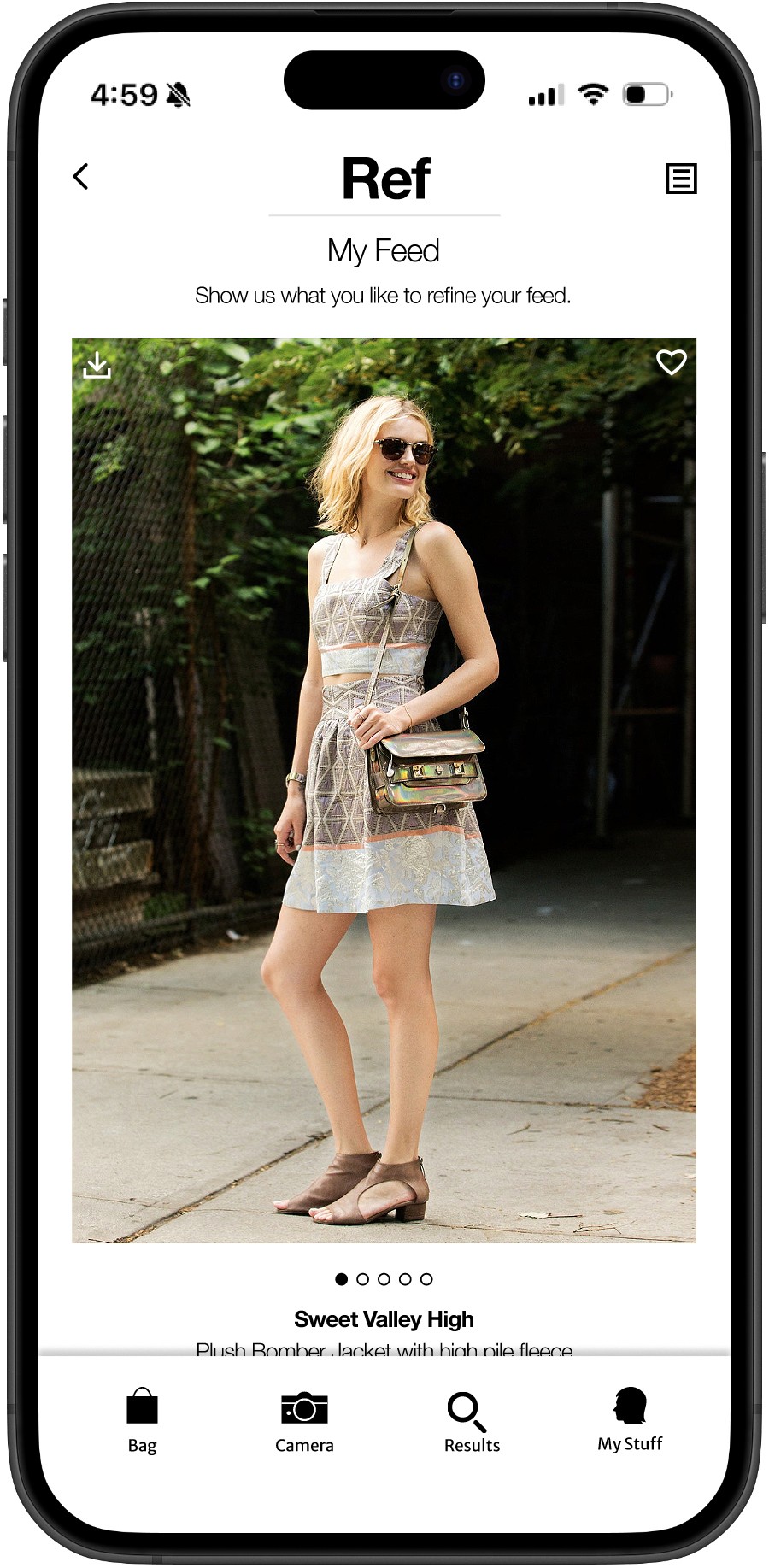
SnapShop reimagined product discovery by combining visual search, AI, computer vision, personalized recommendations, and social content into a single experience.
Rather than asking customers to describe what they wanted, SnapShop let them start with a single image. From there, AI identified visually similar products, recommended complementary items, surfaced relevant editorial content, and connected customers with communities sharing similar interests and styles.
For retailers, this created new opportunities to expose the breadth of their catalogs, strengthen brand perception, increase cross-selling, and improve both conversion rates and average order value.
SnapShop wasn't designed to make search more accurate; it was designed to help brands become more discoverable, more relevant, and more valuable to their customers.
Leadership Insight
Customers don't think in keywords; they think in moments of inspiration.
The most valuable digital experiences don't simply help people find what they're looking for. They help them discover possibilities they didn't know existed. When technology removes friction and expands discovery, it strengthens both the customer relationship and the brand.